
Online Ordering & Booking System for Local Businesses
A mobile-first ordering and booking system concept for restaurants, salons, tutors, hotels, laundry services, and local logistics businesses that need customers to take action directly from their website.

Stack
Next.js App Router • TypeScript • Prisma • PostgreSQL
Context
A mobile-first ordering and booking system concept for restaurants, salons, tutors, hotels, laundry services, and local logistics businesses that need customers to take action directly from their website.
Problem
Many local businesses rely on WhatsApp chats, phone calls, Instagram DMs, or manual notebooks to collect orders and bookings. This leads to missed requests, poor tracking, unclear availability, no structured customer history, and unnecessary back-and-forth.
Solution
Build a structured customer-facing flow where visitors can browse services or products, select what they need, submit order or booking details, receive confirmation, and allow the business owner to manage everything from an admin dashboard.
Who it is for
Restaurants, salons, laundry businesses, hotels, private tutors, event vendors, logistics businesses, repair services, and other SMEs that need customers to order, book, or request services online.
Technical snapshot
Status
planned
Difficulty
intermediate
Repo
private
Core features behind the case study.
This section turns the project from a simple portfolio item into a useful breakdown visitors can understand.
Mobile-first public website experience for local business customers.
Product and service catalogue with images, descriptions, prices, and CTA buttons.
Order request flow for food, products, laundry, logistics, or similar businesses.
Booking request flow for salons, tutors, hotels, consultants, and appointment-based services.
Quote request flow for businesses that need custom pricing.
Customer contact capture with name, phone, email, location, and notes.
Admin dashboard for managing requests by status.
Status pipeline such as New, Reviewed, Confirmed, In Progress, Completed, and Cancelled.
Customer confirmation message after submission.
Admin notification when a new request is created.
WhatsApp handoff button for businesses that still want conversation after structured capture.
Foundation for payment collection, delivery updates, and customer history.
How the system is structured.
Customer website ↓ Product / service catalogue ↓ Order, booking, or quote request form ↓ Server-side validation ↓ Database stores customer request ↓ Customer confirmation email or WhatsApp CTA ↓ Admin notification ↓ Admin dashboard status pipeline ↓ Business follow-up and fulfillment
Key build decisions.
1. Public catalogue: Show services, products, pricing, images, descriptions, and CTA buttons. 2. Request flow: Support order, booking, and quote request variants. 3. Customer details: Collect name, phone, email, location, preferred date/time, and special notes. 4. Admin dashboard: Show requests in a clean table with filters and status updates. 5. Notification layer: Send confirmation to the customer and notification to the business. 6. Future payment layer: Add Paystack, Flutterwave, transfer confirmation, or manual payment status later. 7. Analytics: Track most requested items, busiest days, abandoned flows, and repeat customers.
Why it matters.
This system helps a local business become more organized, more responsive, and more professional. It reduces lost orders, creates a better customer record, and makes it easier to add payments, delivery tracking, analytics, and automation later.
Challenges behind the case study.
This section turns the project from a simple portfolio item into a useful breakdown visitors can understand.
Different local businesses need different flows, so the system must be flexible without becoming confusing.
Some businesses need booking slots while others need product quantity, delivery details, or quote notes.
The public flow must be simple enough for mobile users with low patience and varying internet quality.
Admin status updates must be clear so staff do not accidentally lose or duplicate customer requests.
The system must support WhatsApp handoff without making WhatsApp the only place where the business record exists.
Lessons learned behind the case study.
This section turns the project from a simple portfolio item into a useful breakdown visitors can understand.
Local business systems should begin with the exact action customers need to take.
A clean status pipeline is often more valuable than a visually complex dashboard.
WhatsApp is useful, but structured data capture should happen before the conversation when possible.
The same core system can serve many industries when the catalogue and request model are flexible.
Mobile-first layout is not optional for local business customers.
Interface atmosphere and workflow direction.
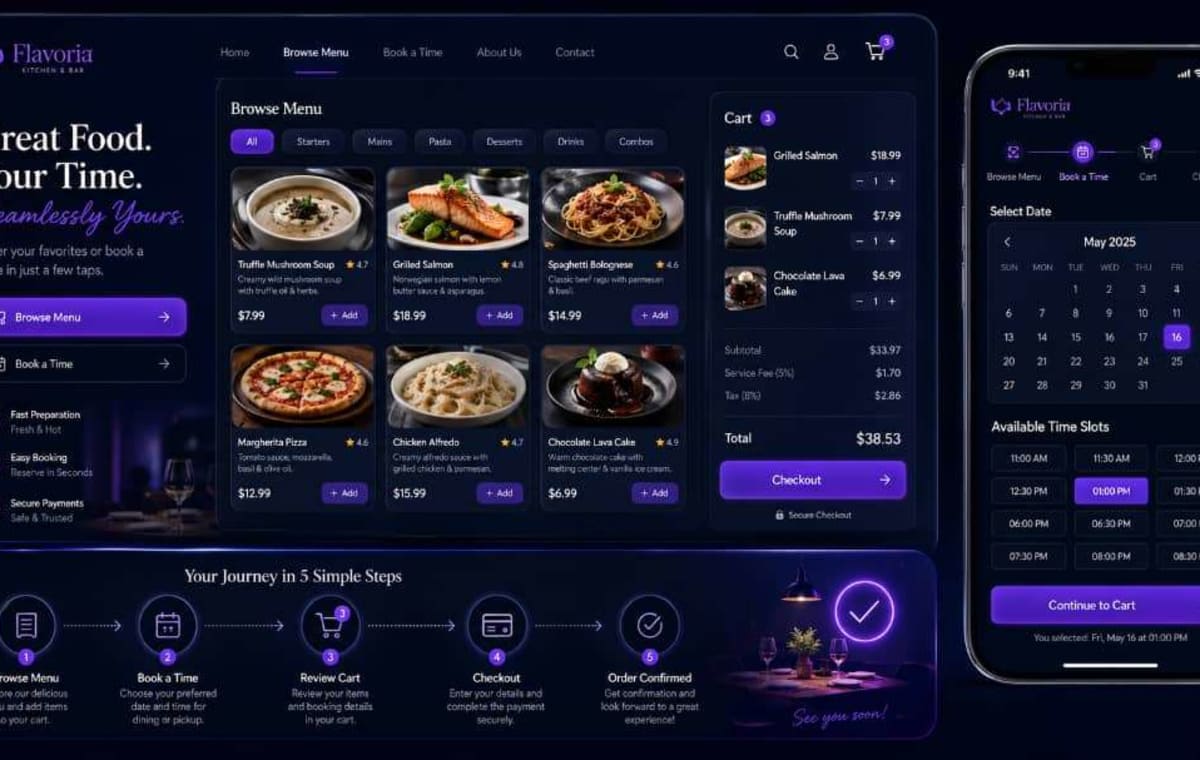
Online Ordering & Booking System for Local Businesses gallery image

Online Ordering & Booking System for Local Businesses gallery image
What the project improves beyond surface-level appearance.
The strongest work usually creates better clarity, better decision-making, stronger trust, and better operational flow.
Reduces manual back-and-forth by collecting structured order and booking details upfront.
Improves customer experience with a clear mobile-first flow instead of scattered messages.
Gives business owners a central dashboard for new, pending, confirmed, completed, and cancelled requests.
Creates a foundation for payments, delivery updates, availability control, and customer history.
Helps local businesses move from informal social-media selling to organized digital operations.
Follow the Build Lab
Want more case studies like this?
Subscribe and I’ll send you new builds, lessons, and practical breakdowns when fresh case studies go live.
Receive new insights and case studies
Get notified when Oliseyenum publishes new posts, Build Lab case studies, and practical updates on systems, data, and learning.
Like this build or ask a question.
Likes help me know which systems people care about. Comments are moderated before showing publicly.