olise
thanks for this info

A tutoring framework that shows how mathematics support can be structured through assessment, weak-topic diagnosis, weekly lesson planning, guided practice, progress checks, and parent/student reporting.

Stack
Diagnostic assessment • Mathematics topic mapping • Weekly lesson planning • Practice tracking
A tutoring framework that shows how mathematics support can be structured through assessment, weak-topic diagnosis, weekly lesson planning, guided practice, progress checks, and parent/student reporting.
Many students struggle with mathematics because lessons are not structured around their actual weak areas. They may keep practicing random questions without a clear diagnosis, learning order, or progress plan.
Create a structured tutoring improvement plan that begins with assessment, identifies weak topics, organizes weekly lessons, tracks practice, and communicates progress clearly to students and parents.
Parents, secondary school students, primary school pupils, exam candidates, tutorial centers, and learners who need structured mathematics support.
Status
planned
Difficulty
beginner
Repo
private
This section turns the project from a simple portfolio item into a useful breakdown visitors can understand.
Initial mathematics diagnostic assessment.
Topic-level weak area identification.
Personalized weekly lesson plan.
Foundation-first teaching sequence.
Guided examples before independent practice.
Practice assignment tracking.
Mistake review and correction notes.
Progress checks after each topic block.
Parent/student summary report.
Exam preparation support for timed practice and strategy.
Future-ready structure for a tutoring dashboard or booking system.
Initial student assessment ↓ Topic and skill diagnosis ↓ Weak-area priority list ↓ Weekly lesson plan ↓ Guided teaching session ↓ Practice assignment ↓ Correction and review ↓ Progress check ↓ Parent/student feedback report ↓ Next topic recommendation
1. Assessment template: Use topic-based questions to detect weak areas. 2. Student profile: Record class level, exam goal, current confidence, weak topics, and available study time. 3. Lesson plan: Create weekly plans based on topic priority. 4. Practice tracker: Track completed practice, accuracy, and correction notes. 5. Progress report: Summarize improvement, remaining weak topics, and next actions. 6. Future dashboard: Allow parent/student login to view progress, lesson notes, assignments, and upcoming sessions.
The value is trust and clarity. Parents can see that tutoring is not just hourly teaching; it is a structured support system with diagnosis, weekly planning, practice, review, and progress communication.
This section turns the project from a simple portfolio item into a useful breakdown visitors can understand.
Students may have hidden foundation gaps that are not obvious from their current class topic.
Parents may expect instant improvement, so progress must be communicated realistically.
A tutoring plan must balance school syllabus, exam preparation, and weak-topic repair.
Students need confidence-building as much as content teaching.
Practice must be consistent or the lesson plan will not produce meaningful improvement.
The system must avoid fake claims and focus on method, structure, and measurable progress.
This section turns the project from a simple portfolio item into a useful breakdown visitors can understand.
Good tutoring starts with diagnosis, not assumptions.
Weak topics should be arranged in a logical learning order.
Confidence improves when students can see small wins.
Parents value clear communication and visible structure.
Mathematics improvement is easier to explain when supported by assessment and progress tracking.
The tutoring framework can become a digital product later through booking, dashboards, and reports.

Structured Mathematics Tutoring Improvement Plan gallery image
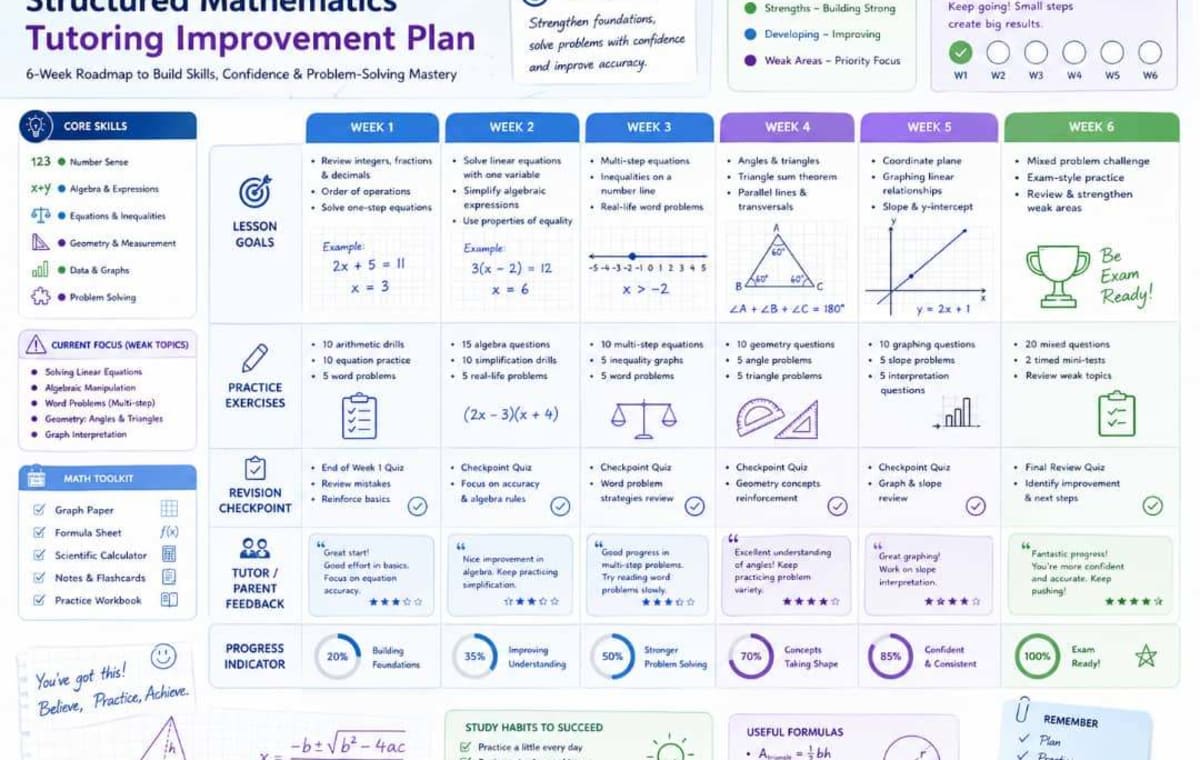
Structured Mathematics Tutoring Improvement Plan gallery image
The strongest work usually creates better clarity, better decision-making, stronger trust, and better operational flow.
Gives students a clearer learning path instead of random practice.
Helps parents understand what the student is working on and why.
Improves confidence by breaking mathematics into manageable topic goals.
Creates a professional tutoring method that can be explained on the website.
Connects tutoring service with assessment, planning, and progress reporting.
Follow the Build Lab
Subscribe and I’ll send you new builds, lessons, and practical breakdowns when fresh case studies go live.
Get notified when Oliseyenum publishes new posts, Build Lab case studies, and practical updates on systems, data, and learning.
Likes help me know which systems people care about. Comments are moderated before showing publicly.
Replies are moderated before they appear. Names like Admin and Oliseyenum are reserved for official dashboard replies.
thanks for this info